What follows is a curated selection from a wider case archive, chosen specifically to illustrate recurring patterns of collapse and clarity.
These casebook selections explore how clarity emerges—or collapses—in moments where evidence is incomplete, narratives compete, and consequences are real. These cases are not presented to prove guilt, innocence, or correctness, but to examine how the mind reasons under strain, where it fails, and how coherence can be restored.
The Casebook
Real examples of reasoning toward clarity under pressure

Case 001 — The Weight of First Judgment
Medical error under pressure (generalized from personal experience)
Situation
Early in my career, shortly after being cleared as an independent paramedic, I responded to a call involving a vehicle that had struck a bus shelter. The weather was cold and rainy. The car had taken a turn too fast, lost control, and rolled through the shelter where a man had been sitting.
On arrival, we encountered a homeless gentleman seated amid the wreckage. He was conscious, alert, and communicative. His only complaint was leg pain. Due to the weather, he was wearing multiple layers of clothing.
When his leg was exposed, it was clearly fractured. Beyond this, no obvious external injuries were visible. A rapid assessment did not reveal clear signs of additional trauma.
At that moment, I faced a decision that carried real consequence: adhere to the formal checklist that determines whether a patient is transported to a community hospital or escalated to a trauma center — or override it based on a growing sense that this man’s injuries exceeded what the criteria could yet confirm.
Based on what I could see, he appeared to have a serious but isolated leg injury — not the kind of presentation that automatically triggers trauma hospital-level care.
The Pressure Field
Several forces were acting simultaneously:
I was newly independent, with minimal experiential depth to draw on.
I was the sole medic on scene; no senior clinician was present.
Recent departmental discipline had been issued for “unnecessary” helicopter launches and trauma activations.
Formal trauma activation for transport to a trauma hospital criteria were not met.
My clinical intuition suggested the patient was more seriously injured than the checklist indicated.
Paramedic discretion to override the checklist was technically permitted, but culturally discouraged.
Every person on scene was waiting for my decision.
The critical tension was not between two clinicians — it was between intuition and institutional structure.
The Decision
I deferred to the checklist.
Despite an internal sense that something was wrong — that the mechanism and presentation did not fully align — I chose to transport the patient to the local hospital rather than activate trauma resources under discretionary authority.
The decision was defensible on paper. In reality, it was incomplete.
The Collapse
At the hospital, the attending physician assessed the obvious injury, ordered antibiotics, and requested an orthopedic consult. The situation appeared stable — briefly.
Moments later, the patient’s blood pressure collapsed. When a urinary catheter was placed, there was immediate blood return.
Further evaluation revealed a shattered pelvis — a catastrophic injury that had not been apparent in the field.
I do not know the ultimate outcome. I cannot imagine it was favorable.
Forensic Reanalysis Through The Master’s Wheel
This case illustrates several core principles of cognitive collapse under pressure:
Narrative Compression
The patient’s coherent speech, singular complaint, and visible injury invited a premature narrative — one that fit the checklist cleanly. At the same time, an intuitive signal suggested the story was incomplete. Under pressure, the formal narrative prevailed, not because it felt truer, but because it felt safer to act on and easier to justify. This was not the absence of intuition, but its subordination to narrative certainty — reinforced by departmental culture, recent discipline, and the authority of the checklist.
Checklist Substitution
Formal criteria replaced judgment. The checklist became a proxy for certainty rather than a tool to support it.
Institutional Pressure
Recent disciplinary actions exerted invisible force, narrowing perceived options and discouraging discretionary reasoning.
Underdeveloped Internal Template
At that stage of my career, I lacked a mature internal model for reconciling mechanism, physiology, and intuition when they conflicted.
Suppressed Anomaly Recognition
The mismatch between mechanism (high-energy impact) and presentation (isolated complaint) was noted — but not acted upon.
What This Case Reveals
This was not a failure of caring, competence, or effort. It was a failure of cognitive architecture under load.
The error did not occur at the moment of transport. It occurred earlier — when uncertainty was prematurely resolved.
The Master’s Wheel Insight
The Master’s Wheel trains the mind to recognize these moments before commitment:
When intuition conflicts with structure
When narratives stabilize too early
When institutional pressure masquerades as prudence
When clarity is confused with compliance
Clarity is not choosing faster. It is choosing later, with better perception.
This case exists not to assign blame, but to make visible the mechanics of collapse — so they can be recognized, interrupted, and retrained.
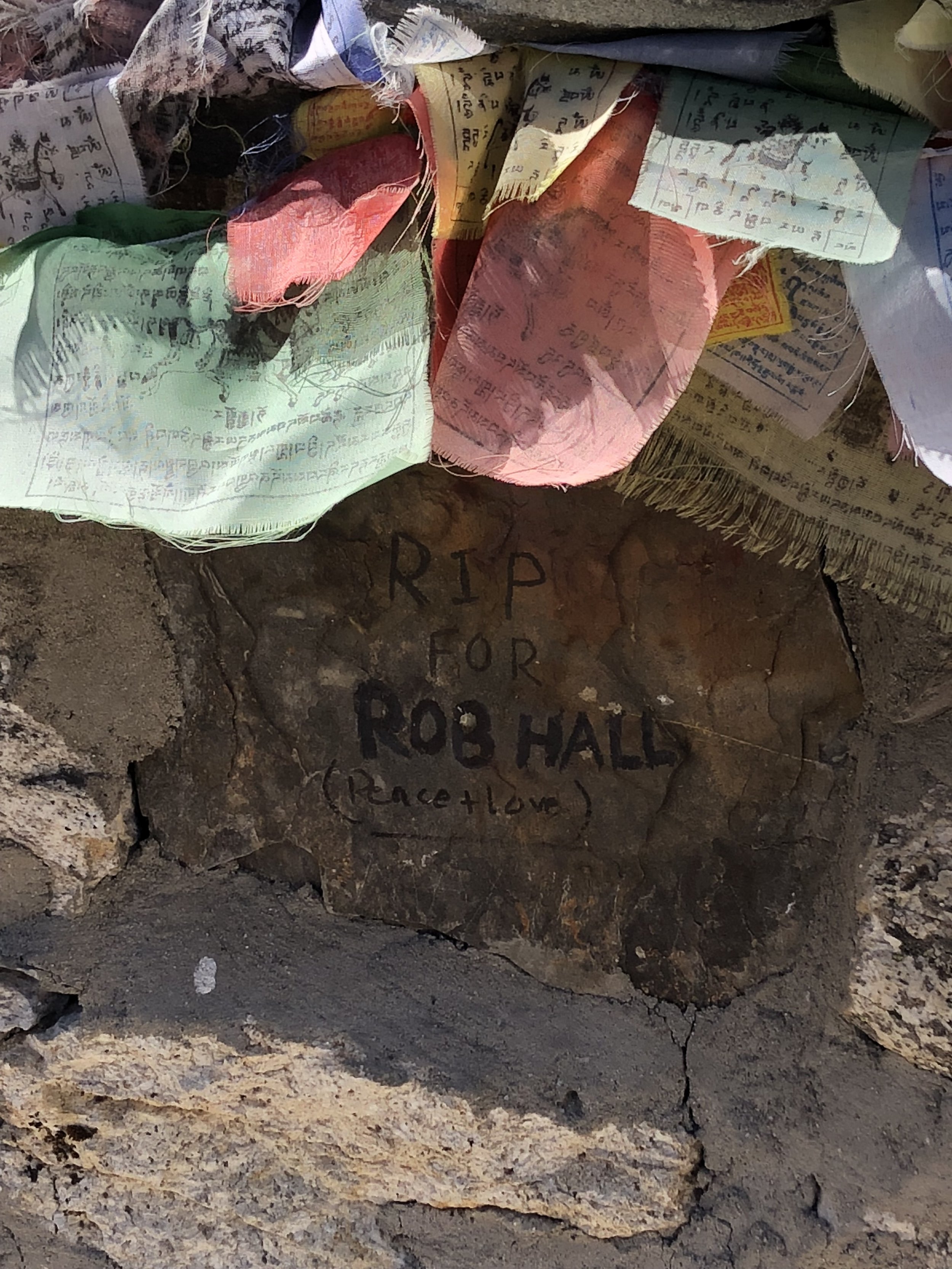
Case 002 — The 1996 Everest Disaster
Narrative Commitment Under Altitude, Ambition, and Reputational Pressure
Situation
In May 1996, multiple commercial expeditions attempted to summit Mount Everest via the South Col route. Two of the most prominent were led by Rob Hall (Adventure Consultants) and Scott Fischer (Mountain Madness), both highly experienced guides operating in an increasingly competitive high-altitude guiding market.
After weeks on the mountain acclimating to increasingly higher altitudes and awaiting the expected brief window of stable weather, May 10 became the focal summit date. Hall, in particular, had successfully summited on that date in prior seasons. Embedded within Hall’s team was journalist Jon Krakauer, reporting for Outside magazine — introducing a subtle but powerful internal pressure. The climb was no longer just an ascent; it was a story already being written, raising the stakes of turning around from operational failure to public narrative failure.
As climbers moved upward on summit day, weather forecasts were ambiguous but increasingly concerning. Nonetheless, multiple teams continued past established turnaround times, pressing toward the summit. A sudden and violent storm later engulfed the upper mountain, trapping climbers high on the route. Eight people died.
The Pressure Field
Several reinforcing pressures converged simultaneously:
Commercial Stakes: Turning clients around without summiting represented not just disappointment, but reputational and financial failure for guiding companies.
Date Anchoring: May 10 had been successful for Hall in the past, creating a powerful psychological anchor that shaped expectations about weather and feasibility.
Competitive Mirroring: Fischer’s team was influenced—implicitly and explicitly—by Hall’s progress. If Adventure Consultants succeeded, Mountain Madness risked being seen as inferior.
Media Presence: Krakauer’s presence amplified reputational pressure. Failure would be publicly documented; success would be immortalized.
Altitude-Induced Cognitive Load: Extreme hypoxia from low oxygen levels degraded judgment, working memory, and the capacity to reassess assumptions.
Weather Interpretation Bias: Early conditions appeared tolerable, reinforcing belief that forecasts predicting deterioration would be wrong—or late.
No single factor caused the disaster. Together, they synergized into a perfect storm that narrowed perception and constrained decision-making.
Narrative Compression
A dominant narrative took hold:
“The weather will hold. May 10 works. We’ve done this before. Turning around now means failure.”
This story compressed complexity into coherence. Conflicting data—delays, traffic bottlenecks, supplemental oxygen depletion, time overrun—were reinterpreted through the lens of this narrative rather than evaluated independently.
Importantly, this was not ignorance of risk. Many sensed danger; critically, several climbers from both teams recognized that the multiple pressure points were converging into an unsafe situation and turned around early. But, for those who continued, the narrative offered a psychologically stable explanation that allowed continued ascent without confronting the full implications of reversal.
Contradiction Ignored
Several contradictions accumulated but were not integrated into an updated narrative:
Turnaround times were exceeded.
Bottlenecks formed on fixed lines, delaying climbers into the afternoon.
Supplemental oxygen caches were mispositioned or depleted.
Weather signs shifted subtly, then unmistakably.
Each contradiction was individually manageable. Collectively, however, they signaled systemic instability early on. Eventually, when they reached critical mass as the storm slammed into the mountain, the narrative could no longer absorb them and the system collapsed.
Identity and Commitment
For Hall and Fischer, the decision to turn around was not merely tactical—it was also a threat to identity:
As elite guides
As business leaders
As public figures
As competitors
Turning back meant confronting personal, professional, and reputational loss simultaneously. As climber Lou Kasischke later articulated, the presence of an embedded journalist introduced performance pressure that made reversal psychologically intolerable.
At altitude, with cognitive bandwidth already compromised, commitment hardened. The narrative shifted from “We should evaluate” to “We must continue.”
The Collapse
When the storm struck, the narrative failed catastrophically.
The belief that weather would hold proved false at the exact moment climbers were most exposed. With daylight fading and oxygen dwindling, decision-making shifted from strategic to reactive. Coordination fractured. Rescue became improvisational.
The collapse was not sudden—it was delayed recognition of a failure that had already occurred upstream in narrative commitment.
Here, a central principle of The Master’s Wheel comes into sharp focus: collapse is not chaos — it is contradiction realized.
When the gap between belief and reality finally exceeded what the narrative could contain, the system did not adapt. It broke.
What This Case Reveals
Narrative Anchoring Outlasts Evidence and Prevents Renegotiation of Risk
Once a dominant narrative is established, new information is not evaluated neutrally. It is filtered through the existing story and interpreted in ways that preserve coherence.
In this case, prior success on a specific summit date created a powerful temporal anchor. As conditions deteriorated, evidence was not ignored—it was reinterpreted to fit the expectation that the narrative would still resolve successfully. The longer the story remained intact, the harder it became to renegotiate its assumptions.
Under pressure, the mind does not ask “What is happening now?” It asks “How can what is happening now still fit the story?”
This illustrates a core insight: once narrative coherence is established, new information is filtered for compatibility rather than evaluated neutrally.
Seemingly Neutral Decisions Are Rarely Neutral Under Load
Under conditions of pressure, ambiguity, and consequence, decisions that appear operationally neutral often carry hidden narrative weight.
Turning around was not merely a tactical choice—it implied personal failure, professional inadequacy, financial loss, and reputational damage. As these narrative costs accumulated, reversal became psychologically more expensive than continuation, even as objective risk increased.
This is the principle of narrative preservation as motive — not recklessness, but an identity-protective constraint on decision space. It emerges as a recurring pattern under load: the perceived cost of changing course silently exceeds the cost of staying on it—until collapse forces a reckoning.
Narrative Convergence Amplifies Risk Across Systems
When multiple actors operate within overlapping narratives, individual decisions no longer remain independent.
Here, parallel expeditions became cognitively coupled through competitive comparison and shared timelines. Escalation by one group increased pressure on the other, creating a convergence effect in which restraint by either party became harder to justify.
Narrative convergence does not require coordination. It emerges when identity, outcome, and comparison intertwine under shared constraints.
Narrative Preservation Intensifies Under Scrutiny
When actions are observed, documented, or expected to be explained publicly, decision-making shifts.
The presence of media introduced an unspoken but powerful pressure: success would be recorded and failure would require justification. This altered the cognitive field from internal risk assessment toward external narrative preservation.
Under scrutiny, the mind prioritizes how a decision will be understood over how it will unfold.
Systemic Collapse Emerges from Cognitive Narrowing and Operational Rigidity
Collapse did not originate in a single bad decision. It emerged from the interaction between a narrowing cognitive field and an increasingly rigid operational system.
As contradiction accumulated—weather shifts, delayed timelines, depleted reserves—the system continued to function mechanically. What failed first was not movement or procedure, but the capacity to revise the story guiding them.
Collapse occurred when the gap between narrative commitment and physical reality exceeded what the system could absorb.
Forensic Reanalysis Through The Master’s Wheel
The 1996 Everest disaster is often explained as a failure of judgment, leadership, or risk tolerance. Through The Master’s Wheel, it resolves into something more precise: a convergence of narrative commitments that became impossible to unwind once the system crossed a point of no return.
Multiple narratives were operating simultaneously:
Professional identity (elite guide, reliable leader)
Commercial obligation (client success, business viability)
Historical anchoring (May 10 as a “proven” summit date)
Narrative inheritance (following a competitor’s momentum)
Public visibility (media presence and reputational exposure)
Each narrative was individually manageable. Together, they created a coherence trap.
As conditions deteriorated, the operational system continued to function — climbers moved and decisions were executed. What narrowed was the cognitive system guiding those decisions. Judgment remained locally rational within a dominant narrative that increasingly diverged from the reality of the situation. Collapse occurred only when the gap between that narrative and actual conditions could no longer be sustained.
This was not recklessness. It was narrative compression under load — a gradual narrowing of judgment that culminated in collapse once contradiction could no longer be contained.
The Master’s Wheel Insight
Through the lens of The Master’s Wheel, the Everest disaster is not explained by poor judgment or isolated error, but by progressive narrative narrowing.
Commitments hardened early. Evidence was reinterpreted rather than renegotiated. Cognitive flexibility eroded while operational activity continued. By the time conditions demanded reversal, the system no longer possessed the narrative or decision bandwidth to accommodate it.
What failed was not courage, competence, or intent — but the system’s ability to reconcile its story with an increasingly incompatible reality.
This case is not presented to assign fault, heroism, or blame.
It exists to illuminate how competent, experienced people can become trapped within narrowing narratives under pressure — and how collapse emerges not from recklessness, but from unresolved contradiction carried too far.
By making these dynamics visible, The Master’s Wheel offers a way to recognize cognitive narrowing earlier, renegotiate commitment before rigidity sets in, and preserve clarity when the cost of reversal still remains survivable.


These cases are representative, not exhaustive.
The Master’s Wheel casebook contains many more analyses across medicine, aviation, mountaineering, law enforcement, leadership failure, institutional collapse, and ethical breakdown under pressure. Some are historical. Some are composite. Many arise directly from lived professional experience.
Not all belong on a public page.
Case selection, depth of analysis, and application are tailored to the environment, stakes, and purpose of the engagement—because clarity is not gained by consuming more examples, but by learning how to see the patterns they reveal.